
Jagua and henna are two popular natural dyes for temporary tattoos that have been used for centuries to decorate the skin. While both provide beautiful designs, they differ in origin, color, and application, making each unique. In this article, we’ll explain the differences between Jagua and henna and help you decide which is right for you.
Origins: Jagua vs Henna
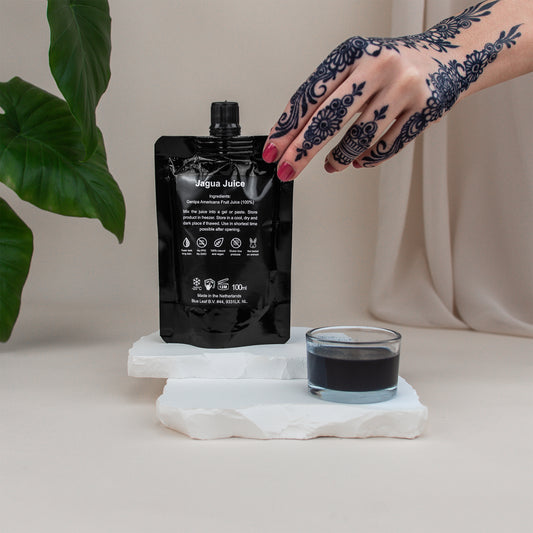
Jagua comes from the fruit of the Genipa americana tree, native to the rainforests of Central and South America. Indigenous communities have used Jagua for generations—not only for body art, but also in cultural and ceremonial practices. The dark blue-black dye created from the fruit has a long-standing tradition of storytelling and spiritual significance.
Henna is made from the leaves of the Lawsonia inermis plant, which grows in North Africa, the Middle East, and South Asia. Henna has a centuries-long history in weddings, festivals, and other celebrations, where intricate patterns symbolize joy, prosperity, and life milestones.
Both dyes reflect rich cultural heritage, yet their visual appearance and application methods set them apart.


Color Differences Between Jagua and Henna
The most noticeable difference is the color each dye produces:
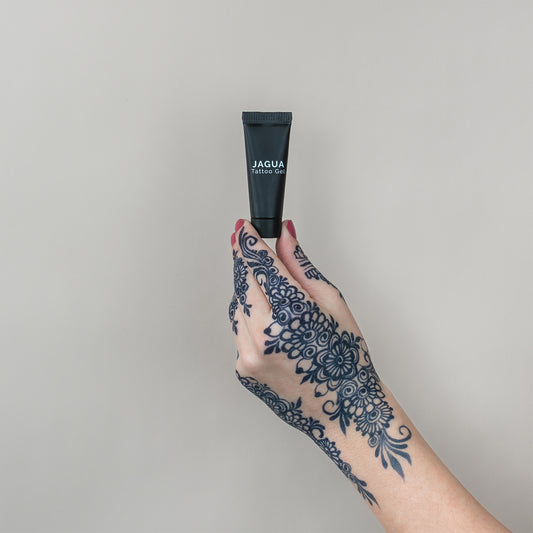
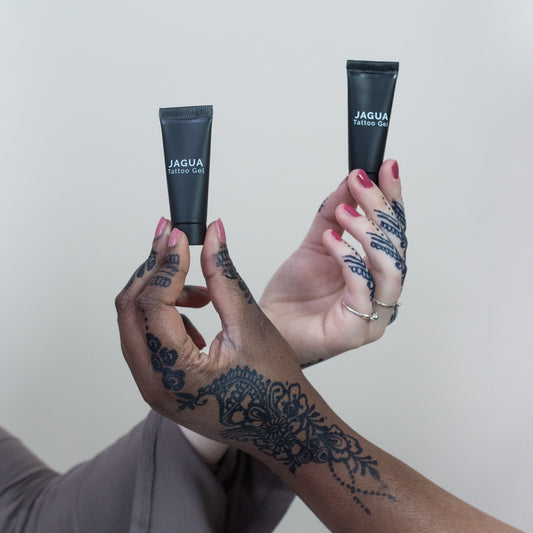
- Jagua tattoos: Deep blue to black, closely resembling permanent tattoos. The color develops over 12–24 hours after application.
- Henna tattoos: Warm reddish-brown to deep orange, depending on the skin tone and quality of the henna paste.
If you want a tattoo-like appearance, Jagua is the best choice. For traditional, earthy tones, henna is ideal.

This image shows Jagua’s deep blue-black color at the top, henna’s warm reddish-brown at the bottom, and a blend of both -called Hengua- on the sides.
Important: Jagua is NOT Black Henna
Beware of products marketed as “black henna.” These often contain PPD (Para-Phenylenediamine), a chemical that can cause severe skin reactions such as blisters, burns, or scarring.
Jagua is 100% natural, safe for most people, and creates a dark stain without harmful additives. It’s a perfect choice for those looking for a dark, temporary tattoo alternative to black henna.